

You built an app that does something genuinely useful. Then it hits you: other people's software could use that exact capability too, if only they could reach it. The moment you let them, and charge for the privilege, your app stops being a destination and becomes a platform. That is the API product play.
In short, an API product is the useful thing your app does, packaged and sold as access that other developers pay to build on top of. You are no longer just running an app; you are running infrastructure other people depend on.
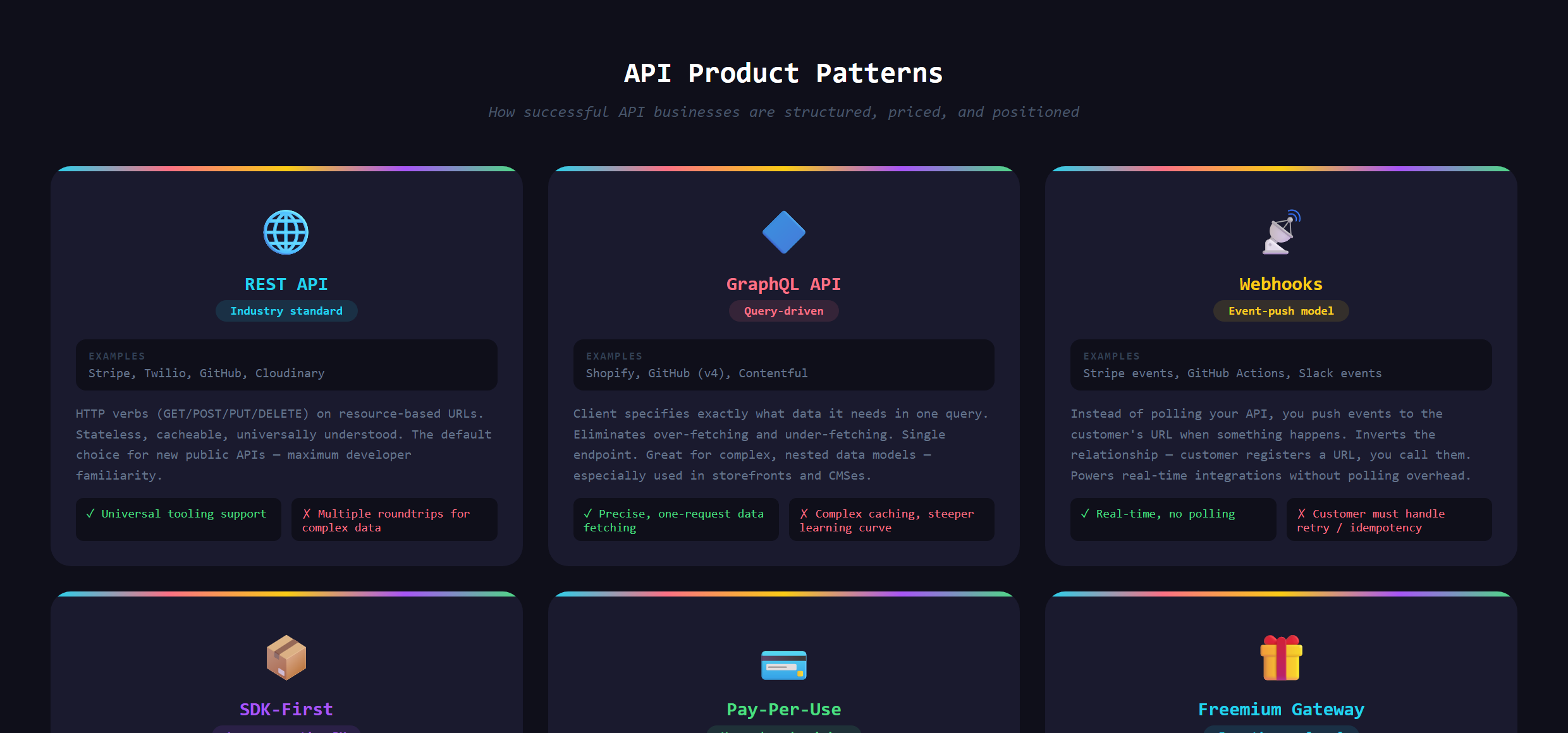
How is this different from just having an API?
Worth being precise here, because the words overlap. If you are fuzzy on the basics, start with what an API is and how apps consume one. That guide is about being the customer: calling someone else's service to get weather, payments, or maps.
This guide is the opposite seat. Here you are the kitchen, not the diner. An API product means you expose your own capability, hand out keys, set prices, write the documentation, and support the developers who build on you. Same technology, completely different role: you flipped from consumer to provider.
Why turn an app into a platform?
Because the same work earns in more places. The capability you already built can now be sold three ways at once: through your own app, through partners who embed it, and through developers who weave it into products you will never even see. You stop trading purely on your own reach.
You have seen this everywhere without naming it. Stripe turned "take a payment" into an API the whole internet builds on. Twilio did it with sending a text. Mapping, weather, and AI models all became platforms the same way: one valuable capability, opened up, metered, and sold. Each is just an app that decided to let others build on it.
What does it take to be a real product?
An API becomes a product when it grows the parts that make it safe to sell and pleasant to buy:
- Keys for customers: each customer gets their own credential, so you know who is calling and can switch any one of them off without touching the rest.
- Metering and limits: you count usage and cap it, both to bill fairly and to stop one customer from overwhelming the service.
- Pricing model: usage-based, subscription tiers, or a freemium mix, chosen to match how your customers actually get value.
- Documentation and trust: developers will not build on something they cannot understand or rely on, so clarity and uptime are part of the product, not extras.
These pieces are why a key for one of your customers is a different thing from an app login: it identifies a developer and their plan, not a person browsing a screen.
What goes wrong if you sell access carelessly?
Opening up your capability without the guardrails is how you get a runaway bill or a crash. With no metering, one customer can hammer your service into the ground or rack up costs you eat. With no per-customer keys, you cannot cut off an abuser without breaking everyone.
And once people build real businesses on your API, every change you make can break their software. The discipline of versioning, fair limits, and clear communication is what separates a platform people trust from one they flee. Selling access is a promise, and the engineering exists to keep it.
Why is this such a strong business?
An API product can be remarkably lean. There is no interface to design, no marketing site doing the heavy lifting; the value is the capability itself. When it is good, your customers' own growth grows your revenue, because they call you more as they succeed. It is a business that scales while you sleep, often run by a tiny team on a modest server you control.
Turning your app into a real API product, the keys, the metering, the pricing model, and the trust layer that makes developers build on you, is covered in Venom AI's Tier 4, part of how we teach you to Make Anything With AI. The leap from app to platform is the moment your software starts working for other people's ambition, not just yours.