

Managed platforms are wonderfully easy until the day you want to do something they do not allow, or you watch the bill climb as your little project grows. Sooner or later a builder wonders what it would take to just run their own server. A VPS is the answer, and it is far less scary than it sounds.
In short, a VPS (virtual private server) is your own slice of an always-on computer in a data center, rented by the month, that you control completely. It is a real computer in the cloud that is yours to do with as you please.
What is a VPS, in plain terms?
Imagine a giant, powerful physical server humming in a data center. Slice it up so several customers each get their own walled-off portion: their own memory, their own storage, their own private space that the others cannot see or touch. Your slice is the virtual private server. It behaves like a whole computer that happens to live in the cloud and never turns off.
You have already used things that quietly run on this kind of setup. A self-hosted password vault, a community game server, a personal media library reachable from anywhere: an enormous amount of the indie internet runs on a humble VPS that costs about as much as a couple of coffees a month.
Why would you self-host instead of using a platform?
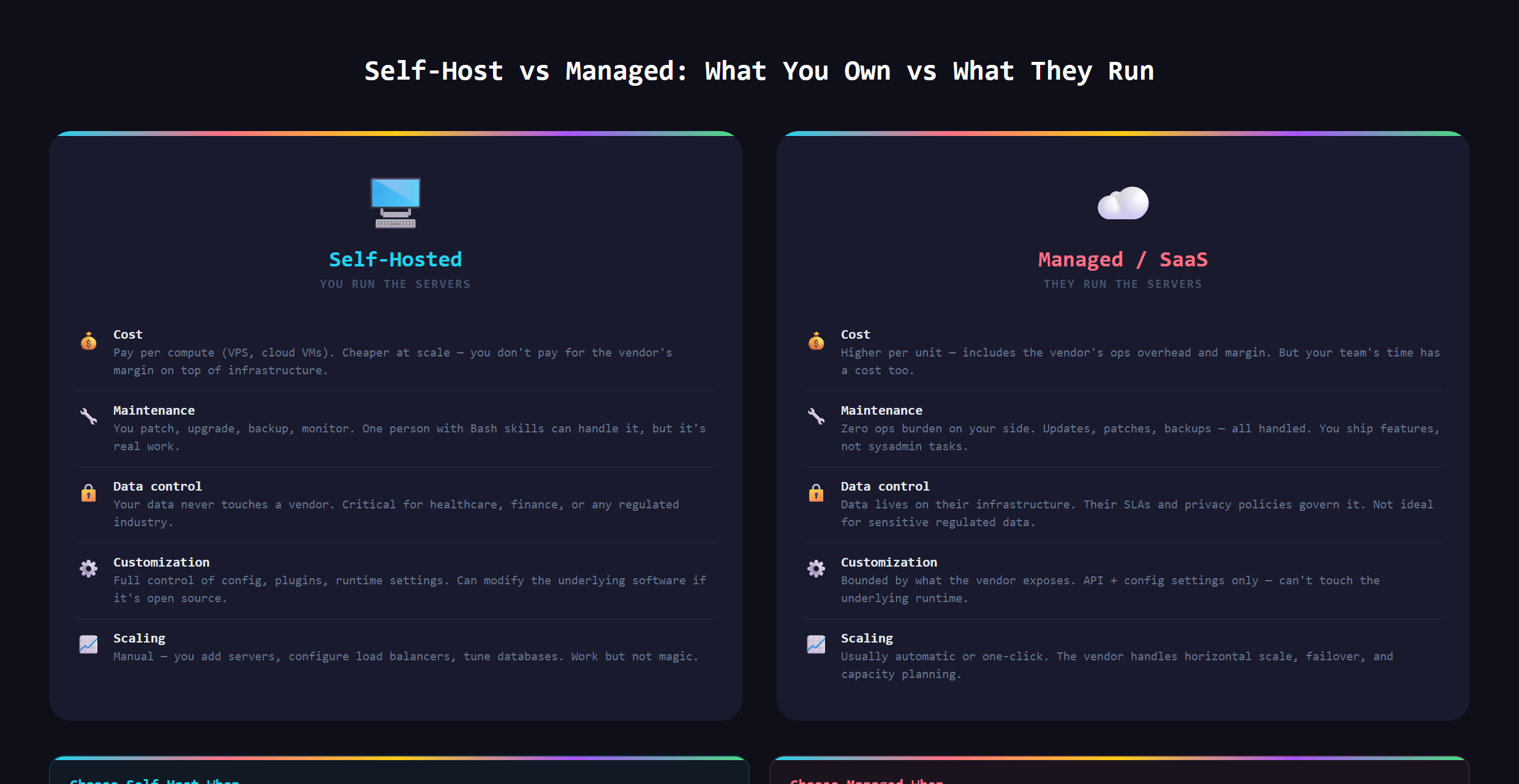
Managed platforms like the ones that handle web hosting for you are fantastic, and for most first projects they are the right call. But a VPS unlocks things they cannot:
- Total control: you decide exactly what runs on the machine, with no platform telling you what is and is not allowed.
- Cost at scale: one modest server can quietly host a dozen of your projects at once, instead of paying per project.
- Ownership: the infrastructure is genuinely yours, not rented convenience that can change its rules or pricing on you.
It is the difference between renting a furnished apartment and getting the keys to an empty space you can build out however you like. More freedom, more responsibility.
Where does Docker come into this?
Once you own a server, you want a clean way to run several apps on it without them tripping over each other. That is what containers are for. Think of a container as a sealed lunchbox that holds an app and everything it needs to run, kept neatly separate from the other lunchboxes on the same shelf.
Docker is the most common tool for packing those boxes. It is why a single VPS can host your blog, your side project, and a private tool all at once without them interfering. The concept is simple even if the setup takes practice: isolate each app, run many on one box, keep the whole thing tidy.
What goes wrong if you skip the fundamentals?
With great control comes the part nobody warns beginners about: a VPS is exposed to the open internet, and keeping it secure and updated is now your job, not a platform's. A server left unpatched and wide open is a target, and people learn this the hard way.
The flip side is empowerment. Understanding your own server demystifies the entire internet. Suddenly the cloud is not magic; it is just computers you can rent and run, and that knowledge connects to everything from running your own API to hosting tools your customers depend on.
Standing up a VPS, packing your apps into containers, and locking it down the right way is covered in Venom AI's Tier 4, part of how we teach you to Make Anything With AI. Owning your own infrastructure is one of the most quietly powerful steps a builder ever takes.