Hand one AI agent a giant, sprawling job and watch it wobble. It starts strong, then loses the plot, forgets a step, mixes up two parts of the task. Not because it is dumb, but because it is doing too many different things at once. The fix is the same one humans landed on long ago: stop making one worker do everything.
In short, a multi-agent system is several AI agents working together on a single goal, each with a focused role, handing work off to one another like members of a team. One does the research, another writes, another checks the result.
You already understand this from any workplace. A kitchen does not have one person cook, plate, and serve every dish. A film set has a director, a camera operator, an editor. Splitting a big job into clear roles is how humans handle complexity, and a multi-agent system is that same instinct applied to AI.
What makes it different from one agent?
Start from the building block. A single AI agent is a model plus tools plus a loop, pointed at a goal. A multi-agent system is several of those, each pointed at a different slice of a bigger goal, coordinating so their work adds up. The unit does not change. You just run more than one, give each a narrow job, and arrange for them to pass results between themselves. It is teamwork, with AI workers.
Why split a job across multiple agents?
The core reason is focus. An AI does its sharpest work when its task is clear and contained. Pile too many unrelated responsibilities on one agent and quality drops as it context-switches. Give each agent a single, clean role, one finds the facts, one drafts, one critiques, and each stays excellent at its narrow job. This is exactly why companies hire specialists rather than asking one person to be great at everything.
How do the agents actually work as a team?
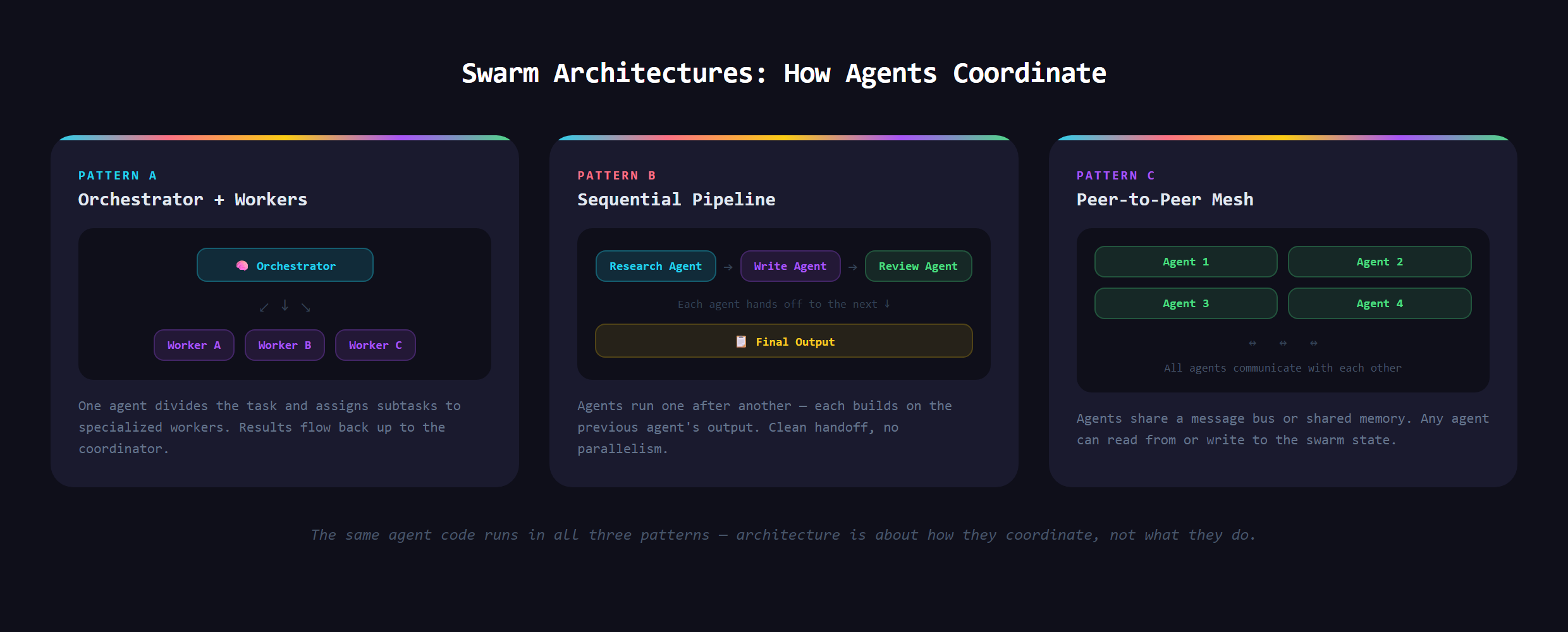
The agents coordinate through hand-offs. One finishes its part and passes the result to the next, the way a baton moves in a relay. Some systems add a coordinator agent whose only job is to direct the others, decide who does what next, and assemble the final answer, much like a manager running a team. Different arrangements suit different jobs, but the heart of it is always the same: clear roles, clean hand-offs, a shared goal.
When is a multi-agent system worth it?
Here is the honest part most hype skips. Multiple agents are not a free upgrade. They add coordination, more places for things to go wrong, and more cost. They are worth it when a task is genuinely too large or too varied for one agent to hold, a serious research project across many sources, a workflow with distinct stages that each need real attention. For everyday jobs, one well-built agent is simpler and more reliable. The skill is knowing which situation you are in.
Where does this fit with the rest of AI building?
Multi-agent systems sit at the advanced edge of the agent world, and they compose with everything around them. Give the team a shared knowledge base through RAG and every agent works from the same facts. Put the whole team on a timer as a scheduled agent and a coordinated crew runs your recurring work overnight. Once you grasp the single agent, the team is the natural next level.
What goes wrong without good design?
The classic failure is reaching for a swarm when one agent would have done. You get a tangle of agents talking past each other, costs multiplying, and a result no better than a single focused agent would have produced. The other trap is fuzzy roles: if two agents think the same task is theirs, they collide. Good multi-agent design is mostly about drawing crisp role boundaries and clean hand-offs, not adding more agents.
Designing a multi-agent system, the roles, the hand-offs, and the coordination that makes a team of agents actually cooperate, is covered in Venom AI's Tier 4, part of how we teach you to Make Anything With AI. Learn to run one agent well first, and the team becomes the obvious next move.