

One page is plenty until it suddenly is not. You add an about section, then a services list, then a contact form, and what was a clean single page turns into an endless scroll where nobody can find anything. That is the moment you need structure, and the builders who plan it early avoid a painful reorganization later.
In short, structuring a website means deciding what pages it has and how navigation links them together, so visitors always know where they are and how to get where they want to go.
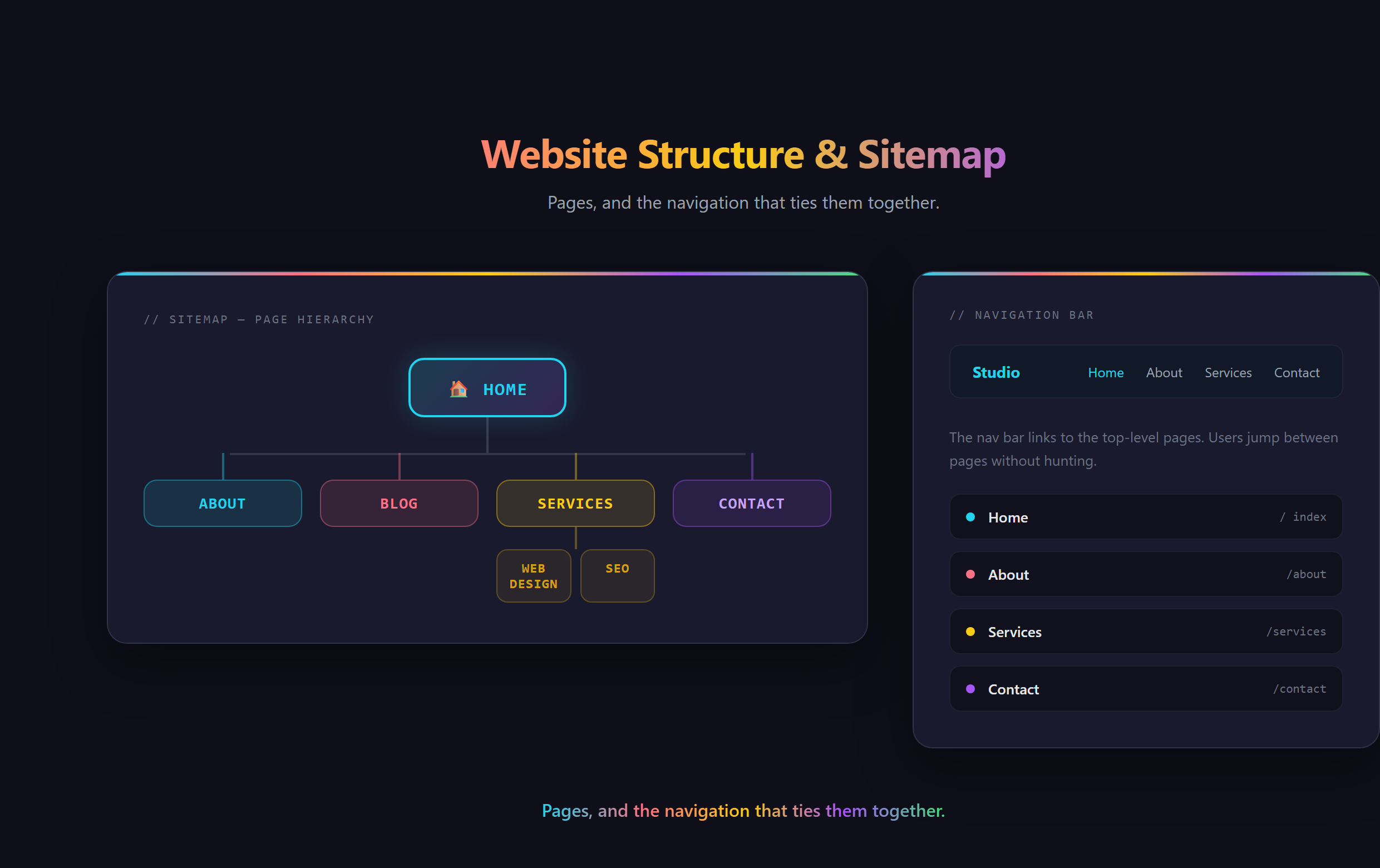
Think in pages, then in paths
A multi-page site is really two questions. First, what separate pages do you actually need? Each distinct job, telling your story, listing what you offer, letting people reach you, usually earns its own page. Second, how does someone move between them? That movement is navigation, and it is what turns a stack of pages into something that feels like one coherent place rather than a bunch of disconnected documents.
You have seen this pattern on every site you use. There is a menu across the top with a few clear links, maybe a logo that always takes you home, and a footer at the bottom with the secondary links. That familiar shape exists because it works. People already know how to use it, so following the convention makes your site instantly easier to navigate.
Good navigation is mostly about not getting lost
The whole point of structure is that a visitor never has to wonder "where am I, and how do I get back?" Clear navigation answers both at a glance. The menu shows the main places they can go, the current page is obvious, and there is always a way home. When that works, people barely notice it. They just glide through your site and do what they came to do, which is exactly the goal.
There is a planning side to this that pays off enormously. Sketching your pages and how they connect before you build, even as a rough map, means you can hand your AI assistant a clear picture of the whole site instead of bolting on pages one at a time and hoping they cohere. A little structure up front is one of those habits we lean on hard at Venom AI, because it makes everything downstream easier.
What goes wrong without structure
Sites built without a plan turn into mazes. Pages get added wherever, the menu grows until it is a wall of links, some pages have no way to reach them at all, and visitors hit dead ends with no obvious way back. People do not fight a confusing site, they leave it. The painful version is when you have to tear apart a half-built site to reorganize it, which is far more work than thinking it through for ten minutes at the start.
Structure also quietly shapes how findable you are. A clean, logical layout with sensible pages is easier for search engines to understand and rank, the same way it is easier for a human to navigate. Good structure serves your visitors and your reach at the same time.
How to plan a multi-page site and build navigation that actually holds it all together, with your AI assistant doing the wiring in VS Code, is walked through step by step in Venom AI's Tier 1. Get the structure right early and your site stays easy to grow, which is half the battle when you Make Anything With AI.